
Background
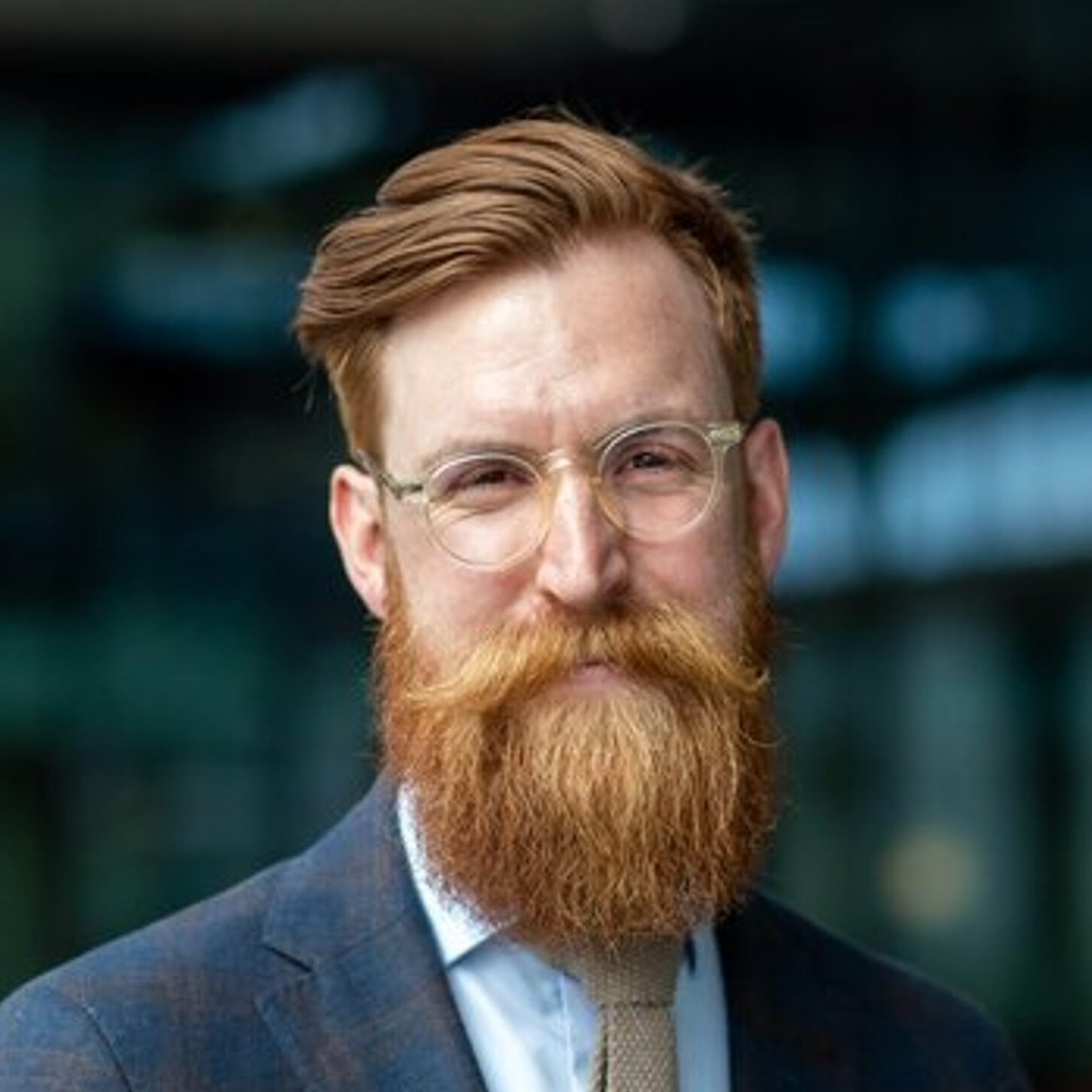
Since February 2026 Johannes T.B. (Bas) Overvelde moved fully to the Eindhoven University of Technology (TU/e) as Full Professor, where he now leads the Autonomous Matter & Machines lab within the Dynamics and Control Section of the Mechanical Engineering Department. Previously, in May 2016, Overvelde started as a tenure-track Group Leader @AMOLF an academic institute for fundamental physics with high societal relevance in Amsterdam, where he started the Soft Robotic Matter Group. Between September 2020 and February 2026, Overvelde was also appointed as Associate Professor at the TU/e. Since then, Overvelde is also affiliated with the Institute for Complex Molecular Systems.
Between 2004 and 2012, Overvelde studied applied physics and mechanical engineering at the Delft University of Technology, where he received both his BSc and MSc degrees in mechanical engineering cum laude. In April 2016, Overvelde finished his PhD in applied mathematics at Harvard University under the direction of professor Katia Bertoldi at the John A. Paulson School of Engineering and Applied Sciences. Overvelde’s PhD research focussed on harnessing compliance and instabilities in engineered structural materials and devices to achieve function.
Title
Autonomous Matter & Machines
Abstract
The Autonomous Matter & Machines Lab explores how to embody autonomous behaviour in soft machines and materials. We draw inspiration from seemingly simple mechanical and dynamical phenomena like the sputtering of a ketchup bottle, the flailing of a skydancer, or the symmetry-breaking occurring upon the inflation of interconnected balloons, that turn out to originate from rich nonlinear behaviour. These tangible and often playful systems provide deep insights into mechanics and dynamics, while also offering a unique entry point for knowledge sharing in research and beyond.
Our aim is to leverage these fundamental insights directly into real-world applications. Similar to how autonomy can emerge in natural systems, we demonstrate the opportunity for finding embodied alternatives to centralised processes (such as AI) that originate from dynamic interaction and environmental feedback. Applications that we are working on in collaboration with various partners include the development of a soft robotic heart that can autonomously adapt to physiological changes, soft grippers that can sense and handle delicate fruits and vegetables, and sustainable architectural facades that adapt to environmental conditions without external power or control.